How America Talks (Differently) About Slavery
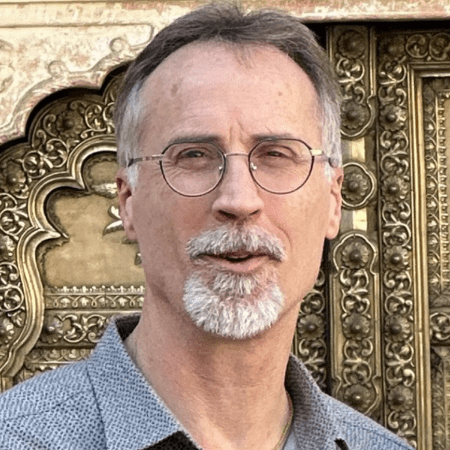
R. Charles Weller, Ph.D.
Thursday May 14, 2026 at 6pm via Zoom
Since colonial times, religious and political divides have existed over how we talk about American slavery. From the New York Times’s 1619 Project to the Trump administration’s 1776 Report, competing visions of race and slavery embody long-standing tensions between critiquing and celebrating America’s history.
In this talk, explore the ongoing debates about the history of slavery. Hear about the modern tensions in education, politics, religion, and culture that reach beyond the classroom into the public domain, revealing how struggles over historical memory remain central to America’s fractured civic life and national identity.
This talk is part of our America 250 programming series, commemorating the Revolution’s anniversary and exploring legacies from new and surprising perspectives. These talks remind us that the American experiment is still unfolding. Says Dr. R. Charles Weller: “The American experiment is not as a settled triumph but a perilous, unfinished challenge: can a nation built on the democratic ideals of liberty, justice and equality for all survive honest reckoning with its own troubled past? Its fate turns on whether criticism is heard as treason or as one of democracy’s oldest means of self-correction, renewal, and moral growth.”
R. Charles Weller, PhD, is Associate Professor of History (Career), Washington State University, and Senior Research Fellow, Al-Farabi Kazakh National University. His work focuses on religious-cultural identity and relations in Western-Asian and world history. Among numerous publications in both English and Kazakh, he is currently working on a four-volume study on how Jewish, Christian, and Islamic sacred law have shaped American national history and identity, particularly with respect to race, slavery, segregation and its Constitutional and national law traditions. He is also working on a related volume titled 1619 vs. 1776: Between Emancipation’s Democratic Promise and Slavery’s Systemic Afterlives.
Charles lives in Redmond.
This talk is presented in partnership with The Thomas S. Foley Institute for Public Policy and Public Service, which educates citizens across the state about democratic institutions and public affairs, and is based at Washington State University. For more information, visit The Foley Institute’s website.
Words, Writers, Southwest Stories is a free monthly speaker series that highlights local authors, historians, and voices to foster a deeper understanding of our community and its people.
This program, like other free programming, is supported by Sustaining Support and Public Free Access funds from 4Culture. Additional support from the City of Seattle Office of Arts and Culture, our sponsors, and from contributions from program participants. Thank you for your donations which support Local History!